


Air Master
Typically replies instantly
Typically replies instantly
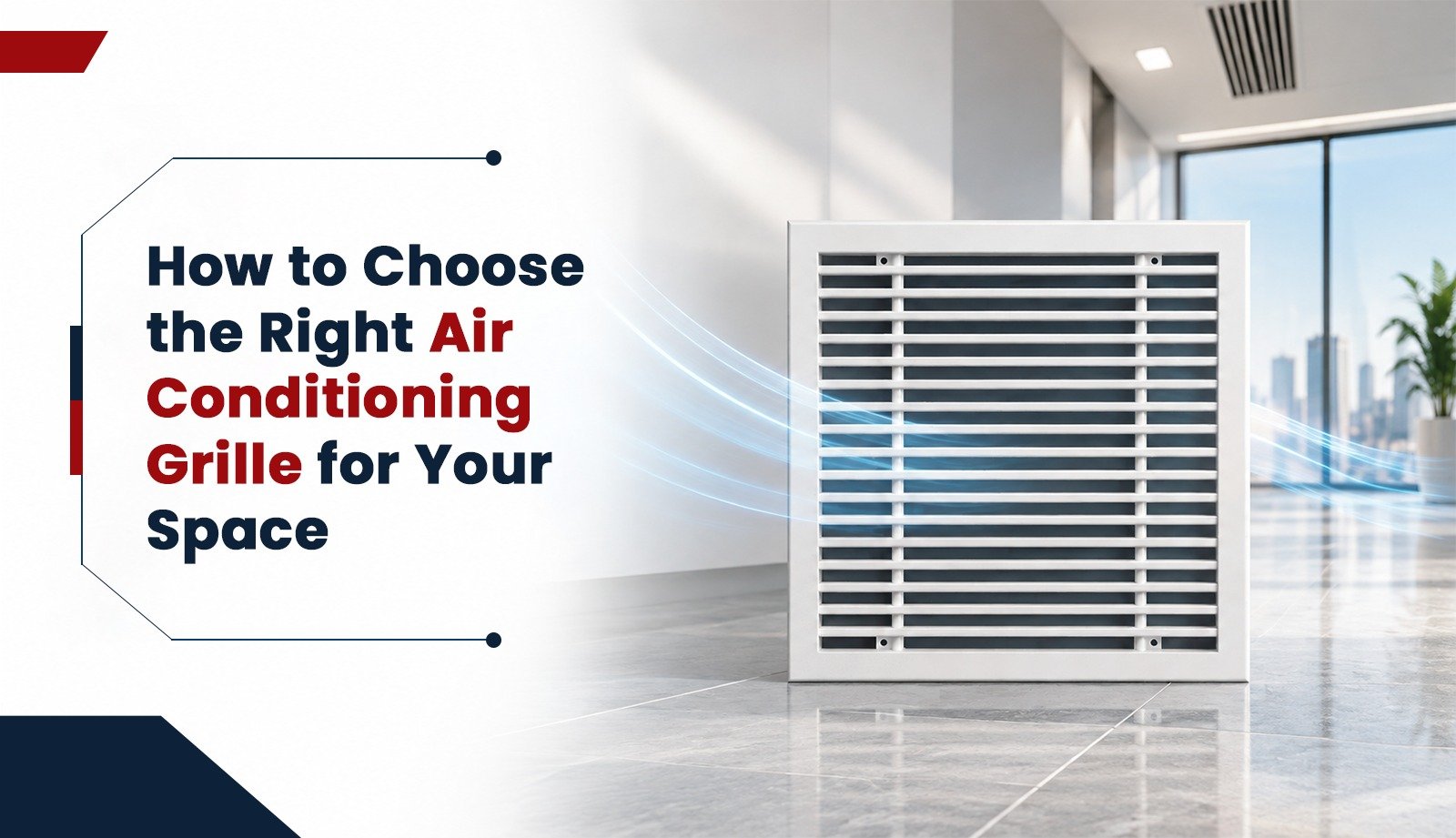
Selecting the right air conditioning diffuser is essential for achieving efficient airflow, consistent indoor comfort, and optimal HVAC system performance. Diffusers are not merely decorative ceiling elements — they are engineered components designed to control air velocity, direction, and distribution within a space.
Whether for residential, commercial, or industrial applications, choosing the correct diffuser requires a clear understanding of room requirements, system capacity, and environmental conditions.
An air conditioning diffuser is installed at the terminal end of ductwork to distribute conditioned air evenly throughout a room. Unlike basic air grilles, diffusers are specifically designed to regulate airflow patterns and ensure proper mixing of supply air with room air.
Proper diffuser selection helps to:
Different environments require different airflow solutions. Below is a professional overview of the commonly used diffuser types and their ideal applications.
Ceiling diffusers are widely used in both residential and commercial spaces. They provide multi-directional airflow and ensure uniform air distribution across standard ceiling heights.
Applications: Offices, homes, retail stores, classrooms.
They are suitable for general air distribution where consistent comfort is required.
Swirl diffusers create a rotational airflow pattern that enhances rapid mixing of supply air with room air. This reduces temperature variations and improves occupant comfort.
Applications: Large halls, open-plan offices, commercial buildings.
They are ideal for spaces that require strong air induction and efficient temperature control.
Slot diffusers feature linear openings that provide controlled and directional airflow. Their sleek design integrates seamlessly into modern architectural ceilings.
Applications: Corporate offices, hotels, high-end commercial interiors.
They combine aesthetic appeal with effective performance.
Flowbar diffusers are linear air distribution systems typically installed along walls or ceilings. They provide continuous airflow along extended lengths.
Applications: Conference rooms, retail spaces, perimeter air distribution zones.
They are particularly effective in large commercial installations.
Perforated diffusers use evenly spaced perforations to distribute air smoothly and quietly. They minimize drafts and provide uniform air mixing.
Applications: Hospitals, libraries, classrooms, office environments.
They are preferred in areas requiring low noise levels and controlled airflow.
Round diffusers deliver radial airflow in all directions, making them versatile for various room configurations.
Applications: Residential spaces, small commercial rooms.
They are suitable for balanced and symmetrical air distribution.
Disc valve diffusers allow adjustable airflow control through a central rotating disc. They are compact and efficient for smaller spaces.
Applications: Toilets, washrooms, utility areas, small rooms.
They offer flexible airflow regulation.
Jet diffusers are designed to deliver high-velocity air over long distances. They are ideal for high-ceiling and large open spaces.
Applications: Auditoriums, industrial facilities, airport terminals, atriums.
They ensure effective air coverage in challenging architectural environments.
Displacement diffusers supply air at low velocity near floor level. The cooler air gradually rises as it warms, displacing stale air upward.
Applications: Theatres, conference halls, high-occupancy areas.
They improve indoor air quality and support energy-efficient ventilation strategies.
SS diffusers are manufactured from stainless steel for enhanced durability and corrosion resistance.
Applications: Hospitals, commercial kitchens, coastal regions, hygienic environments.
They provide long-term reliability in demanding conditions.
Larger spaces or high ceilings require diffusers with extended air throw, such as jet or swirl diffusers. Standard ceiling heights can typically use ceiling or round diffusers.
The diffuser must match the airflow output of the HVAC system. Incorrect sizing can cause noise, drafts, or inefficient distribution.
Consider whether the space requires directional airflow, radial distribution, or long-distance air projection.
For offices, residential spaces, and healthcare environments, low-noise diffusers are essential to maintain comfort.
Architectural preferences may influence the choice between linear slot diffusers, square ceiling diffusers, or concealed systems.
Select materials such as aluminum or stainless steel depending on humidity levels, hygiene requirements, and environmental exposure.
Choosing the right air conditioning diffuser is a critical step in achieving efficient HVAC performance and superior indoor comfort. Each diffuser type serves a specific purpose, and proper selection depends on room dimensions, airflow requirements, design considerations, and environmental conditions.
A well-designed air distribution system not only enhances occupant comfort but also improves energy efficiency and extends HVAC system longevity.
For optimal results, diffuser selection should always align with system design specifications and professional HVAC planning.